
Discover the best generated content detecting tools on ABC AI Tools. From AI text checkers and plagiarism scanners to image, audio, and video authenticity tools, these detectors help you spot machine-made content before you publish, grade, or share it.
Compare detection accuracy, supported content types, false-positive rates, and pricing side by side to find the right fit for educators, publishers, editors, journalists, and businesses. Every top detection tool is curated in one place.
Start exploring and find the tool that helps you trust what you read, see, and hear.
Generated content detecting tools analyze text, images, audio, and video to estimate whether they were created by AI or by a person. As ChatGPT, Claude, Gemini, Midjourney, and voice and video generators become part of everyday work, verifying authenticity has become a routine part of publishing, teaching, hiring, and journalism. These tools give you a quick, data-driven signal about whether content deserves a closer look.
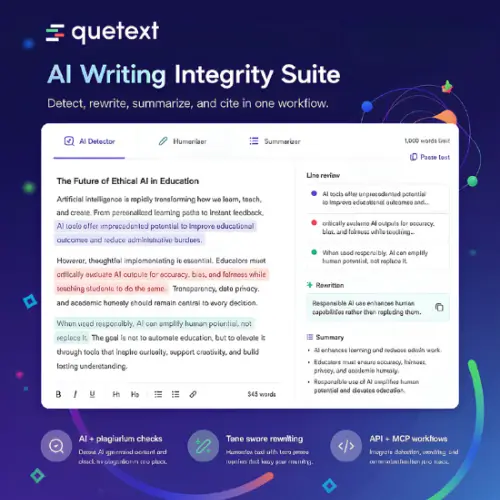
Text detectors measure patterns such as perplexity (how predictable the wording is), burstiness (variation in sentence length and structure), and statistical traits typical of language models. Image and video detectors search for pixel-level artifacts, inconsistent lighting, unnatural textures, and hidden watermarks or metadata. Audio detectors look for synthetic speech signatures and cloning artifacts. Results usually appear as a probability score or a highlighted breakdown showing which passages or regions look generated.
The category covers many kinds of verification. AI text detectors check essays, articles, and emails. Plagiarism and originality tools compare writing against existing sources. Image detectors flag AI-generated photos and artwork. Deepfake detection tools analyze faces, voices, and video for manipulation. Others offer watermark and provenance checking, bulk scanning for teams, sentence-level highlighting, browser extensions, LMS and CMS integrations, API access, and reports you can share with clients or students.
Start with the content type you need to check: text, images, audio, or video. Accuracy and false-positive rates matter most, because wrongly flagging human work can cause real harm to students and writers. Look for tools that publish their testing methods and support the latest AI models. Compare language coverage, document length limits, and features such as sentence highlighting, plagiarism checking, and bulk scanning. Check integrations with Google Docs, WordPress, Canvas, or Moodle, plus API access. Review privacy policies, especially for unpublished or confidential material. Pricing ranges from free tools with word limits to institutional plans.
Test longer samples, since short passages produce unreliable scores. Run important content through more than one detector and compare results. Combine scores with human review, version history, drafts, and writing samples before drawing conclusions.
No detector is 100% accurate, and non-native English writers are more likely to be falsely flagged. Treat results as a signal, not proof, and never base serious decisions such as grades, discipline, or hiring solely on a score. Give people a chance to explain, and protect any personal or confidential content you upload.
We bring together the most useful and current generated content detecting tools in one organized place. Each listing includes key features, pricing, pros and cons, and practical use cases, so you can compare quickly and choose with confidence. Whether you need a free text checker or a full deepfake detection platform, you will find options for every need and budget.
Start exploring and find the tool that helps you trust what you read, see, and hear.
